
المزارع خالد المصري يركب دراجته النارية على طريق زراعي مليء بمياه الصرف الصحي. عكّار، لبنان. ٢٦ تشرين الثّاني ٢٠٢٣. (مروان طحطح، مصدر عام)
اليأس يدفع المزارعين الى المجارير: مياه الصرف الصحي تروي الخضار في عكّار
مقتطفات من الجزء الأول من أربع أجزاء حول وضع المياه في لبنان- البدائل غير الصحية المستخدمة وسوء استخداماتها وجذور أسباب الأزمة وأخيرًا، استخدامها كسلاح.
دنا المغيب في قرية مشتى حمود الواقعة شماليّ لبنان، على الحدود مع سوريا. كنْتُ أجول في حقلٍ موحلٍ، وإذ بي أشعرُ بمزيجٍ لزجٍ من التربة الرطبة والفضلات البشريّة يعلقُ في حذائيّ. وقفْتُ بمفردي أحاول التقاط ما تبقّى من أشعة شمس النهار. فيما زميلي المصوّر الصحفي مروان طحطح يلتقط صوراً لمياه الصرف الصحيّ التي غمرت الأراضي الزراعيّة المحيطة بنا.
فجأة أطلّت شاحنة بيك أب قديمة بيضاء اللون، وصرخ سائقُها:"أنتما! من أنتما؟ وماذا تفعلان هنا؟"
حاولْتُ جهداً أن أتماسَك. لقد أمضينا ثلاث ساعات نقود من بيروت، أي مسافة حوالي 148 كم، لنتحقّق من الإستعمال المزعوم لمياه الصرف الصحيّ في ريّ المزروعات هنا في عكّار، محافظة لبنان الشماليّ. والرجل هذا قد يكون على صلة بالسلطات المحليّة، وقد لا يعجبه أنّنا نفضح القضيّة.
وبغضبِ ظاهر قال:"هل أنتما صحافيان؟"
أحنَيت رأسي إيجاباً وأنا أقترب من الشاحنة مبتسمةً عساه يهدأ.
فصرخ محرّكاً إصبعه باتّجاهي: "إذا كنتِ صحافية، هل يمكنك أن تكتبي وتُخبري الناس عن مشاكلنا؟ هل يمكنك أن تعلميهم أنّ مياه الصرف الصحيّ قد فاضت عندنا؟ أنا آتٍ للتوّ من أرضي، وقد بدأ الشتاء، ومياه الصرف غطّت كلّ مزروعاتي، وما باليد حيلة!"
سألته عن اسمه. قال: "سعيد".
"أعدُك يا سعيد بأنّي سأخبرُ الجميع بذلك".
فانفرجَت أساريرُه. ثم قال:"شكراً"، ومضى.

فتحة صرف صحي مفتوحة تصب المياه الملوّثة في القناة المحاذية للأراضي الزراعية في بلدة مشتى حمود. مشتى حمود، عكّار، لبنان. ٢٦ تشرين الثّاني ٢٠٢٣. (مروان طحطح، مصدر عام)
Akkar is Lebanon’s second-largest agricultural area after the Bekaa Valley. It is home to four main rivers — the Arka, Kabir, Ostuan, and Bared — and some of the country’s most fertile and productive lands. Akkar grows 14 percent of Lebanon’s produce, from peanuts and wheat to olives, avocados, and cucumbers. In the winter, it is Lebanon’s main producer of leafy greens like lettuce, coriander, parsley, and rocca.
It is also one of the country’s most neglected and economically deprived areas. In 2021, the UN Economic and Social Commission for West Asia (ESCWA) estimated that half of Akkar’s families lived in “extreme multidimensional poverty.” Sahel Akkar — the rich agricultural Akkar plain, which extends across the border into Syria — is one of the poorest areas within the governorate.
And yet, since 1992, the Lebanese government and its foreign donors have poured tens of millions of dollars into Akkar’s wastewater sector, including more than $50 million from Council for Development and Reconstruction (CDR) projects alone. These funds were intended to build water treatment plants and sewage collection networks in Akkar. But all local farmers have to show for these millions are fields full of sewage and Lebanon’s first cholera outbreak in almost three decades.
Due to the central government’s longstanding abandonment of Akkar, the once-crystal waters of its streams and rivers, for millennia a vital source of irrigation, are now contaminated with raw sewage. Local farmers are forced to irrigate their crops with either contaminated river water or raw sewage, not out of malice but for lack of better options.
Before the 2019 financial crisis, farmers in Akkar used to pump groundwater to irrigate their lands. But after the banks locked them out of their dollar accounts while the Lebanese lira plummeted, many farmers turned to Akkar’s rivers, Dandachli tells us. Despite being contaminated with sewage, river water became a popular alternative to expensive pumps, which require generators, spare parts, and fuel — all priced in dollars.
“People have a legitimate right to use river waters for irrigation, especially to grow large quantities of good-quality produce,” Ahmad Jahjah, an Akkar resident who works for World Vision, a global development and humanitarian aid organization, points out.

منظر للخيام البلاستيكية الزراعية في منيارة من أعلى التلة. عكار، لبنان. ٢٦ نوفمبر ٢٠٢٣. (مروان طحطح، مصدر عام)
على الرغم من ذلك، قامت الحكومة اللبنانية والمموّلون الأجانب بإنفاق عشرات الملايين من الدولارات في قطاع الصرف الصحي في عكار، وذلك منذ العام 1992، بما في ذلك أكثر من 50 مليون دولار في مشاريع مجلس الإنماء والإعمار وحده. كانت هذه الأموال مخصّصة لبناء محطات تكرير للمياه وشبكات للصرف الصحي في عكار. لكنْ كل ما جناه المزارعون المحليّون من هذه الملايين هو حقول مليئة بمياه الصرف، والإصابة الأولى بوباء الكوليرا منذ ثلاثة عقود.
نتيجة لسنوات من الإهمال من قِبل الحكومة المركزيّة، تحوّلت مياه الينابيع والأنهر في عكار من مصدر أساسيّ لريّ المزروعات على مدى آلاف السنين إلى مياه ملوّثة بالصرف الصحيّ. فيضطرّ المزارعون المحليّون إلى ريّ مزروعاتهم إما بمياه الأنهر الملوّثة إما بمياه الصرف الصحيّ نفسها، لا عن سوء نيّة، بل لعدم وجود خيارات بديلة.
قبل أزمة 2019، كان المزارعون في عكّار يعتمدون على ضخّ المياه الجوفيّة لريّ أراضيهم. لكن، بعدَ أن حبسَت المصارف حسابات الدولار، وهبطت قيمة الليرة اللنانيّة، لجأ العديد منهم إلى مياه الأنهار، كما يقول دندشلي. على الرغم من تلوّثها بالصرف الصحّي، تغدو مياه الأنهار البديل الشائع للمضخّات باهظة الثمن التي تتطلّب مولّدات كهربائية وقطع غيار خاصّة، والمحروقات— وجميعُها مُسعَّر بالدولار.
غير أنّ المياه الملوّثة قد تكون قاتلة. في تشرين الأول- أكتوبر 2022، رصدت وزارة الصحة العامة اللبنانية بكتيريا "فيبريو كوليراي"، المسببة لمرض الكوليرا، في مياه الصرف الصحي ومياه الري والشرب في محافظتي عكار والشمال في لبنان. وبحلول يونيو 2023، سجلت وزارة الصحة 671 إصابة مؤكدة بالكوليرا من مجموع 8007 إصابات محتملة، وهو وباء يسبّب إسهالاً حادّاً يمكن أن يؤدي إلى الوفاة في غضون ساعات في حال عدم معالجته. توفي 23 شخصًا نتيجة لتفشي الوباء.
تنتشر الكوليرا عندما يتناول الأفراد المأكولات والمشروبات الملوّثة بالبكتيريا. عند عدم وصولهم إلى المياه النظيفة والمراكز الصحية، يمكنهم نقل البكتيريا للغير بواسطة مياه الصرف غير المعالَجة. يقول عصمت قاسم، وهو الأستاذ المساعد في مادة علم الأحياء الدقيقة في مركز سلامة الغذاء في جامعة جورجيا: "كلّ ما يعاني منه الشخص المريض سينتهي في الصرف الصحيّ".

هل كان لبنان حقاً يعيش "عصراً ذهبياً"؟
لماذا تحول اقتصاده إلى اقتصادٍ يدعم القطاعات غير المنتجة؟
الكوليرا ليست سوى واحدة من العديد من الأزمات الصحية في شمال لبنان. فقد كان التهاب الكبد الوبائي A، وهو عدوى كبدية معدية بشكل كبير تنتشر عن طريق مخلفات البراز، منتشراً في لبنان على مدى ثلاثة عقود. شهد صيف عام 2022 إرتفاعاً في عدد الإصابات في الشمال - وليس فقط بالتهاب الكبد الوبائي A. لقد لاحظ سكان عكار الذين تحدثنا إليهم زيادة كبيرة في الأمراض المزمنة والقاتلة بين أفراد أسرهم، والتي يعتقدون أنها ناجمة عن التعرض للسموم البيئية.
قال جهجاه: "نحن نرى تداعيات الوضع الحالي على الصحة العامة، لا سيما على شكل أمراض السرطان والرئة. ليس هناك عائلة واحدة في سهل عكار لا يوجد فيها حالة من هذه الأمراض".
في دراسة أُجريت عام 2021 على مياه الأنهار في لبنان، وجد قاسم وباحثون آخرون أنّ 96 في المئة من العيّنات التي جمعوها من 14 نهراً مختلفاً، تحتوي على البراز البشريّ. وقد تخطّت نماذج المياه من ثلث الى ثلاثة أرباع المعدّلات الحيويّة المسموح بها للريّ. ثلث العيّنات كانت ملوّثة بشكل يمنع حتى السباحة فيها.
وقد عمل الباحث بين 2021 و2022 على دراسة أُخرى على عيّنات من الخضار المزروعة في شمال لبنان. وتبيّن أنّ 17 في المئة من البقوليات الخضراء المباعة في أسواق طرابلس تحتوي أقلّه على نوع واحد من الطفيليّات.
وعلى الرغم من المخاطر المعروفة، يقول قاسم أنّ لبنان يفتقر إلى وسائل الحماية التي تضمن عدم تعريض الناس للخطر من مجرّد تناول الطعام.

منظر لبلدة منيارة من أعلى التلّة. عكّار، لبنان. ٢٦ تشرين الثّاني ٢٠٢٣. (مروان طحطح، مصدر عام)
Unfinished Projects
Between 1990 and 2021, the central government received $1.3 billion in foreign loans and roughly $200 million in grants earmarked for wastewater projects in Lebanon. Much of this funding was directed to the CDR, a public institution created by government decree in 1977, during Lebanon’s civil war, to oversee planning and contracting. Throughout its history, the CDR’s board and upper management has consisted of allies of Lebanon’s political heavyweights, including former prime ministers Rafik and Saad Hariri, as well as Speaker of Parliament Nabih Berri.
Between 2001 and 2020, the CDR issued $763.3 million worth of wastewater contracts nationally, according to government watchdog Gherbal Initiative. Our review of the CDR’s publicly available contract summaries, in addition to those published by Gherbal, found that, as of the time of publication, the CDR has awarded at least $79.40 million in contracts dedicated either partially or in full to wastewater management in Akkar since 1992.
The projects, funded by donors including the Islamic Development Bank, the Arab Fund for Economic and Social Development, and the Italian government, range from building water treatment plants to establishing wastewater pipeline networks. Some contracts include both wastewater and drinking water components.
Our review reveals that contractors have so far received at least $51.21 million under these agreements, with the remaining $28 million due to be disbursed upon the completion of these projects. Despite these significant outlays, however, the reality in Akkar points to a gaping disparity between ambitious plans and their outcomes on the ground.
The Akkar plain, says Jahjah, “is plagued by unfinished projects.” Even when completed, projects form a patchwork, failing to connect into a usable integrated whole.
The most expensive wastewater infrastructure contracts that the CDR has launched in Akkar, based on our review, is a $47.17 million contract awarded to Homan Engineering Company Limited to supply and lay more than 17,000 meters of sewer pipes and connect over 1,000 houses to sewage networks in Halba, Akkar’s capital, and three other nearby localities, according to the CDR’s description. Since 2017, $36.76 million has already been spent on the contract, according to the CDR, which notes the contract is proceeding “as scheduled” and is due to be completed by December 31, 2024. Since 2014, Gulf Spectrum has received $1.49 million for its consultancy and supervision services on the project.
Homan’s lead on the project, Imad Hawi, tells The Public Source that the company has delivered the project as stipulated in its contract. The CDR’s contracting portal showed the contract as roughly 75 percent done as of press time. The Public Source could not independently confirm the degree to which the project is finished.
But Hawi opines that the project itself is insufficient.
“We implemented the project completely and it’s closed, we have nothing left,” Hawi says. But because the project doesn’t include connections from the sewers to a functioning wastewater treatment plant, “no one benefits from it.”
In order for people to benefit from this project, Hawi says the state “needs to commit to new projects to take our line and connect it to the Qobbat Shamra station and the Qobbat Shamra station also needs to become operational,” adding that nothing is currently being planned.
“Maybe people will complain [about the project] because, in the end, we didn’t reach a destination. We reached a manhole on the plain and it’s closed and we stopped there…It was necessary to do this work. But to make this money worthwhile, and benefit Akkar, we need these two points: a line and a treatment plant.”
Asked about potential criticisms from Akkar residents who don’t see benefits from the region’s infrastructure projects, Hawi says: “I swear, I don’t know what to say to people. They’re right. What can I say? Even the places that have water treatment plants are not working. It’s a disaster!”
عندما طلبْتُ من المصري أن نتحدّث في مكان آخر، دعانا إلى بقعة أرضيّة واسعة مليئة بالبقدونس. حالما رأيْتُ تلك الأوراق الخضراء الطازجة، فكّرت كم يكون جميلاً لو استعملْتُها لتحضير سلطة التبّولة. لكنّ فكرتي الثانية جعلَتني أتساءل عمّا إذا كان طعم البقدونس سيكون مألوفاً أم أنّه ممزوجاً بطعم الصرف الصحيّ. ثم أشحْتُ عن ذهني هذه الصورة غير الصحيّة وتابعْتُ الحديث.
قال المصري مبتسماً: "ليسَت الرائحة بهذا السوء. عليكي أن تأتي في الصيف! سيستحيل عليكي المشي هنا بسبب الرائحة".
وشرح المصري أنّ مياه الأمطار مؤخرًا ساعدَت في تصريف بعض مواد القناة الملوّثة في البحر. كما أنّ المزارعين المحليين يقومون في بعض الأحيان، بتحوير مياه الأنهار الى القنوات لتسريع تصريف مياه الصرف الصحيّ في البحر.
سألْتُ: "ماذا عن الدولة؟"
فنظر إليّ بازدراء قائلاً:" الدولة؟ أيّ دولة؟"
تُعدّ محطات تكرير المياه بديلاً آمناً وأقلّ كلفة لمشاريع الريّ من مياه الأنهار الملوّثة. ويمكن لمحطات التكرير التي تديرها الدولة أن تحوّل مياه الصرف الصحيّ إلى مياه صالحة وآمنة للإستعمال الزراعيّ، بكلفة مقبولة للمزارعين.
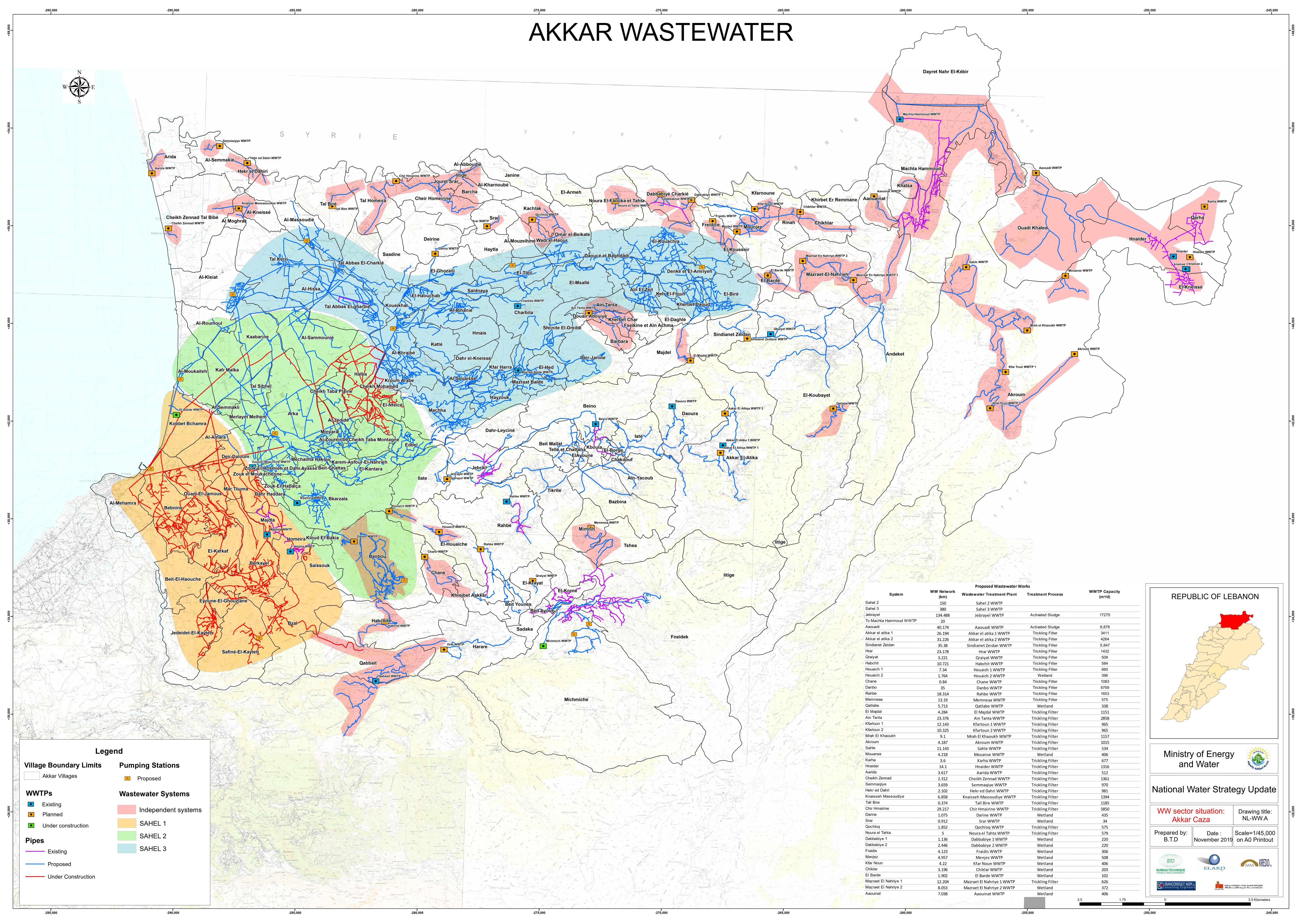
لكنْ من أجل الحصول على تكرير فعّال لمياه الصرف الصحيّ في عكار، يجب إنشاء نظام صرف صحيّ متين. حتى تشرين الثاني-نوفمبر 2019، يوجد في عكار 16 محطة لإعادة تدوير مياه الصرف، لكنّ معظم البلدات لا تمتلك الأنابيب اللازمة لنقل مياه الصرف الصحيّ للمحطّة. فقط 62% من سكان عكار يستفيدون من نظام الصرف الصحي العامّ.
لقد حصلت الحكومة المركزيّة على 1.3 مليار دولار من الديون وحوالي 200 مليون دولار من الهبات المخصّصة لمشاريع تكرير مياه الصرف في لبنان. تمّت إحالة العديد من هذه الأموال إلى مجلس الإنماء والإعمار.
بحسب مبادرة غربال للمراقبة الحكوميّة، أصدر مجلس الإنماء والإعمار بين عامي 2001 و2022 عقودًا بقيمة 763.3 مليون دولار لمشاريع تكرير مياه الصرف على المستوى الوطني. ومن مراجعتنا لملخصات هذه العقود المتاحة للعامّة، كما للملخّصات المنشورة من قِبل غربال، تبيّن أنّه حتّى تاريخ النشر كان مجلس الإنماء والإعمار قد أنفق منذ العام 1992 ما لا يقلّ عن 79.40 مليون دولار على عقود مخصّصة كلياً أو جزئياً لإدارة مياه الصرف في عكّار. على الرغم من هذه المبالغ الطائلة، يشير الواقع في عكار إلى خلل كبير بين الخطط الطموحة ونتائجها الفعلية على الأرض.
ويقول جهجاه أنّ سهل عكّار "مُتخَم بالمشاريع غير المكتمِلة". حتى بعد اكتمالها، تبقى المشاريع مجرّد مجموعة منشآت غير متّصلة ببعضها، ولا تشكّل كلّاً متكاملاً قابلاً للإستعمال.

جرار يحرث قطعة أرض زراعية في قرية مشتى حمود، وفي الخلفية أشجار زيتون. عكّار، لبنان. ٢٦ تشرين الثّاني ٢٠٢٣. (مروان طحطح، مصدر عام)
The CDR receives funds from foreign parties and hires contractors to do the construction. In theory, once the project is finished, the CDR delivers these sewage systems and water treatment plants to the water establishments for day-to-day operation. But in reality, administrative disputes between the CDR, municipalities and water establishments over ownership and operation costs of sewage networks continue to this day, as each tries to avoid taking on the considerable financial burden of running these services.
Gaby Nasr, head of the technical department at the North Lebanon Water Establishment, says Akkar does not presently fall under the NLWE’s jurisdiction. “The Akkar plain area does not fall within the scope of [NLWE] involvement yet, neither for water nor sanitation,” he tells us. “Meaning that the villages and towns located in the Akkar plain do not have the infrastructure needed for drinking water, irrigation, or sewage.”
The NLWE will not be authorized to work in Akkar until the transition from municipal control is complete, according to Nasr. Caretaker Minister of Energy and Water Walid Fayad, who has tutelage (supervisory) authority over the four regional Water Establishments, did not respond to a request for clarification on why the ministry has not transferred responsibility to the NLWE.
In comparison, Wassim Daher, the director general of the South Lebanon Water Establishment (SLWE), says that the CDR has been slowly transferring the operations of some of the treatment plants in the south to the SLWE, but that the establishment’s lack of funds means it struggles to afford the maintenance. As a result, only a few water treatment facilities are currently operating in southern Lebanon.
Water treatment plants require consistent power supply to be operational, Jawad Taher, water and development advisor and consultant, points out — a costly prerequisite for most of Lebanon’s water establishments and municipalities. “The treatment plants cannot be reasonably managed if we don’t fix these issues,” he says.
According to Taher, part of the problem lies with the parameters set by the CDR, meaning assumptions about the cost and reliability of energy, consumption of the population, seasonality, influent quality, land availability, etc., which are aligned with European or North American regulations. While having high standards is not wrong, it is also highly unrealistic in Lebanon, he argues, where the water establishments are woefully underfunded and understaffed, and “have no way of covering the operational costs.”
Only five of Lebanon’s 67 water treatment plants are fully or partially operational, a 2023 report by the nonprofit research and advocacy organization Legal Agenda reveals. The north’s largest treatment plant, in Tripoli, was only partially operating. It is supposed to be connected to Nahr al-Bared in Akkar governorate. But as of 2023, the connecting line was not completed.
“There is no continuity in the work,” says Jahjah. “On the contrary, if someone does something good, you will undo what they did, and start again from scratch.”
Of course, whether these projects will get carried out to completion is only one part of the picture. Until Akkar’s towns and villages have a network of sewage pipes to funnel their sewage to treatment plants, all of its multimillion-dollar projects will be connected to nothing — and sewage will continue to flow downhill.
In June 2023, Lebanon’s Ministry of Energy and Water (MoEW) and Ministry of Environment (MOE) launched an ambitious project, funded largely by the the European Union and administered by UNICEF, to get 11 of Lebanon’s water treatment plants up and running, as well as “promoting public awareness” of wastewater’s “impact on the environment and health.”
Akkar’s farmers are all too aware of wastewater’s impact on their health. But until the government gets its [----] together, they will keep using the contaminated water, even though they know the consequences. They have no other choice.
“Not only do we irrigate with sewage water and dirty water,” says Masri, laughing ruefully, “we even fight for it!”
—تغطية إضافية: دانا حوراني
مساعدة بالتحرير: سيمون عسّاف وبول كوكران
في الجزء الثاني، نتابع مع شاحنات المياه التي توصل المياه الى المنازل عندما تفشل الدولة.
Share this page