The Voice of the South and the Witness on the Frontline, Silenced by Israeli Attack on Journalists
Hundreds gathered at the Rawdat al-Imam al-Sadek temporary cemetery in Choueifat for the funeral of journalists Ali Shoeib, Fatima Ftouni, and her younger brother, cameraman Mohammad Ftouni on the morning of March 29.
Mourners wailed in grief under heavy rain and chanted, “Death to Israel! Death to America!”
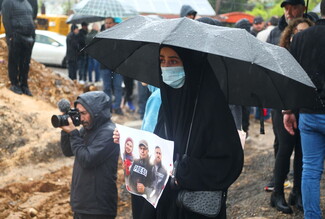
A woman clutches a photo of martyred journalists Ali Shoeib, Fatima Ftouni, and Mohammad Ftouni during the funeral procession for the three. Rawdat al-Imam al-Sadek temporary cemetery, Choueifat, Dahieh. March 29, 2026. (Marwan Bou Haidar/The Public Source)
A day earlier, on March 28, Israel assassinated Al Manar’s Ali Shoeib, one of Lebanon’s most prominent journalists, and Al Mayadeen’s rising star Fatima Ftouni, alongside Ftouni’s younger brother, freelance videographer Mohammad. Israeli airstrikes targeted their vehicle on the Kfarhouna road near Jezzine.
Eyewitnesses said Fatima ran from the vehicle after the first strike, when the car was struck again with two missiles and set ablaze. As she tried to escape, a car carrying two paramedics from the Islamic Health Authority, Ahmad Anisi and Mohammad Daher, stopped to provide assistance. After they exited the car to help her, an Israeli drone then fired two more missiles, killing all three.
Standing near the scorched vehicle, Fatima’s colleague Jamal Ghourabi reported from the site, holding up burned press vests recovered from the car. “This is Israel,” he said.
“The Voice of the South”
Hajj Ali Shoeib, 56, was from al-Sharqiyah near Nabatieh, and was known for his meticulous reporting on Israel’s attempts to reassert its presence in the South after its liberation in May 2000.
He joined Al Manar in 1999 and became the “voice of the South” — a nickname he earned for his dedicated reporting from southern Lebanon. Over the course of his career, Shoeib reported from Lebanon and Iraq, bearing witness to battles against Takfiri groups, including in the Beqaa during the 2017 Arsal battles.
He continued reporting through the October 2023 war and was known for his close coverage of clashes between Hezbollah and the Israeli occupation.
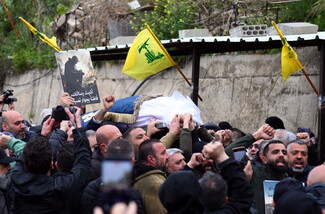
Mourners carry the body of martyred journalist Ali Shoeib, draped in an Al Manar flag, through a crowd during his funeral procession. Rawdat al-Imam al-Sadek temporary cemetery, Choueifat, Dahieh. March 29, 2026. (Marwan Bou Haidar/The Public Source)
Many remember Shoeib from a September 2022 video report in which he confronted Israeli soldiers as they fortified their occupation in the Shebaa Farms.
“Don’t come any closer, back off,” he warned them.
Shoeib later said: “This Israeli soldier standing here doesn’t dare approach me further. I am standing on liberated Lebanese land, while he stands on the occupied Lebanese land of Shebaa Farms.”
Shoeib was among the first to document the collapse of the occupation’s checkpoints at Qantara and al-Qusair. He also documented early Israeli attempts to divert and seize water from the Wazzani River after the withdrawal.
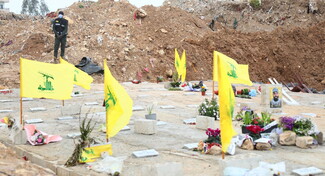
Hezbollah flags line a temporary mass cemetery in Dahieh, where Ali Shoeib, Fatima Ftouni, and Mohammad Ftouni were buried after a targeted Israeli attack on their car the day prior. Rawdat al-Imam al-Sadek temporary cemetery, Choueifat, Dahieh. March 29, 2026. (Marwan Bou Haidar/The Public Source)
Shoeib understood the risks of his work and had acknowledged and accepted that he had become a target.
“Israeli media mention me by name, and soldiers even address me directly, saying ‘Your turn is coming’ but I pay no attention,” he told Al-Akhbar in 2023.
“They see me as a provocation because I expose their violations. I’m not trying to provoke them, I’m just doing my job professionally, without theatrics. I do not yield to Israel. I aim to reveal the truth of the enemy through the reports and images I publish.”
Journalist Hosein Mortada told Mundo America that occupation forces regularly sent Shoeib text messages and emails explicitly threatening to kill him. Israeli drones routinely followed him to intimidate him, but he refused to back down.
“Until Our Very Last Breath”
Fatima, 30, and her brother Mohammad Ftouni, were from Taybeh, a village in Marjeyoun near Lebanon’s southeastern border, now a site of intense close-quarters clashes between the Israeli occupation and the Lebanese resistance.
Fatima joined Al Mayadeen in 2020 and was known for her consistent and courageous reporting from high-risk areas along the Blue Line, even amid ongoing fighting.
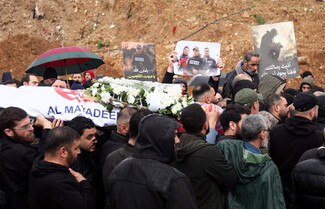
Mourners carry the body of martyred journalist Fatima Ftouni, draped in an Al Mayadeen flag during the funeral procession. Rawdat al-Imam al-Sadek temporary cemetery, Choueifat, Dahieh. March 29, 2026. (Marwan Bou Haidar/The Public Source)
Fatima said that, in the absence of accountability and the ineffectiveness of international law, it was her duty to document Israel’s crimes.
“As long as there’s no response to Israelis, and as long as it is not being held accountable for these crimes, and as long as the international community keeps looking away, it will continue and will go further in its intentional and clear crimes,” she said in a documentary by The Real News Network released in May 2025.
In October 2024, Fatima survived an Israeli strike on a compound housing journalists in Hasbaya. Three journalists were assassinated in the attack as they slept.
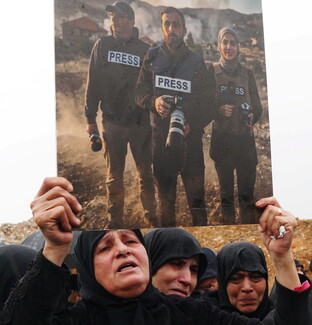
A woman holds up a photo of slain journalists Ali Shoeib, Fatima Ftouni, and Mohammad Ftouni during their funeral procession, held one day after Israel targeted their car on Kfarhouna road near Jezzine. Rawdat al-Imam al-Sadek temporary cemetery, Choueifat, Dahieh. March 29, 2026. (Marwan Bou Haidar/The Public Source)
Hours later, she held up her damaged press vest, helmet, and a melted microphone and said: “This is the weapon that we carry; this is the rocket for which Israeli warplanes raided us.” She continued, “We stand here atop the rubble of our homes and the destruction in Hasbaya, and affirm that we will continue to expose the truth, the reality, and the crimes of the Israeli occupation — until our very last breath.”
Fatima’s father, Abbas Ftouni, told Al Mayadeen he had not seen his two children in 28 days — nearly a month since the latest war on Lebanon began.
“Fate got to them first,” he said.
Ten members of the Ftouni family have been killed since the start of this latest escalation, including Abbas’ brother and his family. Less than a week before Fatima and Mohammad were killed, their grandmother succumbed to injuries sustained in an earlier strike that killed their uncle and his family.
Despite his loss, Fatima's father, Abbas remained steadfast, saying, “This path was paved with blood… By God, we will be victorious… The path must continue, whether we offer martyrs or not.”
Share this page