Veteran Journalist Mohammad Sherri Killed by Israel
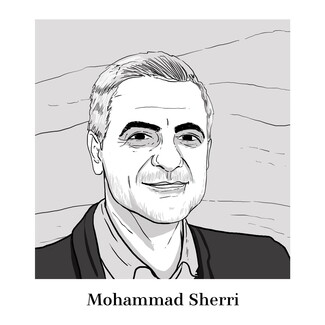
On Wednesday, March 18, 2026, at around 1:30 a.m., Israeli occupation forces targeted a building in Zuqaq al-Blat, deliberately killing Al Manar political programs director and veteran anchor Mohammad Sherri and his wife Amal. The two are among 12 people killed in airstrikes that struck multiple parts of Beirut, starting at 1:30 a.m. and continuing into the early morning hours.
Sherri’s children and grandchildren were injured and have since been hospitalized. Among them are his son — also a media worker — Yasser Sherri, and Yasser’s daughter. Yasser works as an editor for the Iraq-based Aletejah channel, affiliated with Kata’ib Hezbollah.
(Illustration by Amy Chiniara/The Public Source)
The airstrike targeted the house Mohammad Sherri was in, as he was recovering from surgery. Eyewitnesses at the scene reported that the walls of two adjacent apartments were blown off completely.
The president of the state-affiliated Press Editors’ Syndicate, Joseph al-Kossaifi, characterized the attack as an “assassination.” The Union of Journalists in Lebanon, the independent union established during the October 17 uprising, condemned the attack in a statement, and called on the state to fulfill its duty to document and investigate Israel’s war crimes in Lebanon.
Sherri’s killing is part of a systemic campaign to target Hezbollah socially and politically as much as militarily — a directive that Israel has intensified since the war began in October 2023. Not only does the Zionist entity go after journalists as an attempt to suppress the documentation of its own crimes, it specifically assassinates media workers who align themselves with Hezbollah and the Lebanese resistance. Targeting these civilians is an attempt to silence the voices that connect the military front with the popular base of the resistance.
Beside leading the television station’s political programming, a role he held for a decade, Sherri also served on the Board of Directors. Throughout his long and dedicated career, “he embodied the image of the militant journalist,” Al Manar said in a statement. Adding that he was a “committed nationalist, who believed in the power of the liberated word to defend what is right, no matter the sacrifice.”
His audiences will remember him as a “cultured, balanced, and logical interviewer,” while his colleagues knew him to be “ethical, calm, and dedicated.”
Al Manar mourned Sherri “as a martyr for free speech” and made a pledge to him and all the fallen martyrs “to keep marching on the path of justice.”
Since October 2023 until today, Israel has killed 22 media workers and journalists across Lebanon in both direct and indirect strikes.
(Illustration by Amy Chiniara/The Public Source)
Just over a month after Israel first targeted a group of journalists in Alma al-Shaab on October 13, 2023 — killing Reuters video journalist Issam Abdallah and seriously injuring Christina Assi of Agence France-Presse — Israeli occupation forces targeted and killed two journalists and one media worker reporting from Tayr Harfa for Al Mayadeen TV.
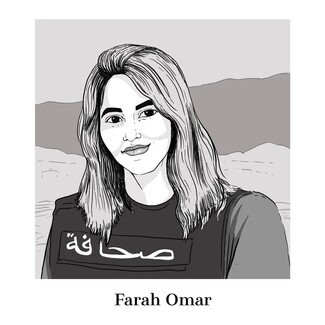
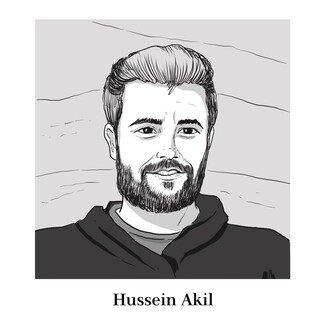
The airstrike on Tayr Harfa on November 21, 2023, killed correspondent Farah Omar, videographer Rabih al-Maamari, and local field producer Hussein Akil. They were 25, 44, and 30 years old, respectively.
Farah Omar hailed from Mashghara, in the Bekaa, and Hussein Akil from Jibbain, in south Lebanon. In Al Mayadeen’s broadcast that night, correspondent Wafa Saraya described Omar as passionate about her work, and said Farah lived up to her name, which means “joy.”
(Illustration by Amy Chiniara/The Public Source)
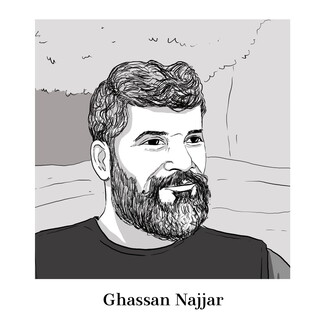
A year later, on October 25, 2024, at 3:30 a.m., the Israeli military targeted 18 journalists as they slept at a compound in the southeastern Lebanese town of Hasbaya, killing Al Manar videographer Wissam Qassem, Al Mayadeen videographer Ghassan Najjar, and Al Mayadeen broadcast engineer Mohammed Reda, and injuring three others.
They had relocated to the compound after the Israeli military issued a forced evacuation order that included Ibl al-Saqi, where they had been reporting earlier. The group believed they would be safe after relocating to Hasbaya.
Journalists reporting from southern Lebanon always inform UNIFIL of their movements and places of rest. UNIFIL, in turn, informs all parties involved, meaning the Israeli military was fully aware that the bungalows in Hasbaya housed reporters and their crews. The information that was supposed to protect these media workers was, instead, used to target and kill some of them.
(Illustration by Amy Chiniara/The Public Source)
In an interview with the Guardian shortly after the attack, Najjar’s wife, Sana, said she cannot believe her husband was killed. “I’m still waiting for the door to open and for him to enter,” she said. “He promised me that we would grow old and go live in the South together — but now he stayed there and I will stay here, in Beirut, forever.”
The Public Source has been documenting attacks on journalists since the start of the war. The following list has been compiled using the most reliable information available at the time of publication. We encourage our readers to contact us with any corrections.
Media Workers Killed Between October 13, 2023 and November 27, 2024
- Issam Abdallah (1986–2023)
- Affiliation: Reuters video journalist
- Date of killing: October 13, 2023
- Location: Alma al-Shaab
- Farah Omar (1998–2023)
- Affiliation: Al Mayadeen correspondent
- Date of killing: November 21, 2023
- Location: Tayr Harfa
- Rabih al-Maamari (1979–2023)
- Affiliation: Al Mayadeen videographer
- Date of killing: November 21, 2023
- Location: Tayr Harfa
- Hussein Akil (1993–2023)
- Affiliation: Local field producer
- Date of killing: November 21, 2023
- Location: Tayr Harfa
- Kamel Karaki (undetermined–2024)
- Affiliation: Al Manar videographer
- Date of killing: September 24, 2024
- Location: Qantara
- Hadi al-Sayyed (2002–2024)
- Affiliation: Al Mayadeen, social media unit
- Date of killing: September 24, 2024
- Location: Burj Rahhal
- Hussein Safa (undetermined–2024)
- Affiliation: Hawana Lebanon photographer
- Date of killing: October 11, 2024
- Location: Mayfadoun
- Mohammed Ghadboun (undetermined–2024)
- Affiliation: Freelance photographer
- Date of killing: October 16, 2024
- Location: Qana
- Mohammed Bitar (undetermined–2024)
- Affiliation: Nabatieh municipality journalist & communications officer
- Date of killing: October 16, 2024
- Location: Nabatieh
- Ali al-Hadi Hassan Yassine (undetermined–2024)
- Affiliation: Al Manar videographer
- Date of killing: October 23, 2024
- Location: Dahieh
- Hassan Roumieh (1995–2024)
- Affiliation: Al-Wadi News Group reporter and & al-Risala Scouts rescue worker
- Date of killing: October 23, 2024
- Location: Maarakeh
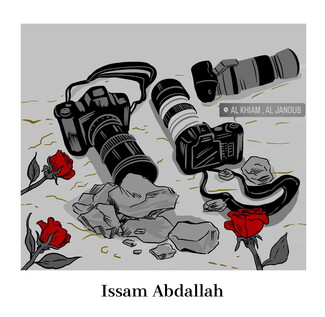
An illustration of the moment journalists put their cameras on martyred journalist Issam Abdallah's grave during his funeral in his home town of Khiam, South Lebanon. October 14, 2023. (Illustration by Amy Chiniara/The Public Source)
- Ghassan Najjar (undetermined–2024)
- Affiliation: Al Mayadeen videographer
- Date of killing: October 25, 2024
- Location: Hasbaya
- Mohammed Reda (undetermined–2024)
- Affiliation: Al Mayadeen broadcast engineer
- Date of killing: October 25, 2024
- Location: Hasbaya
- Wissam Qassem (1986–2024)
- Affiliation: Al Manar videographer
- Date of killing: October 25, 2024
- Location: Hasbaya
- Sukayna Mansour Kawtharani (undetermined–2024)
- Affiliation: Radio al-Nour correspondent
- Date of killing: November 12, 2024
- Location: Joun
Media Workers Killed During the Cessation of Hostilities
- Ali Hassan Ashour (undetermined–2024)
- Affiliation: Radio al-Nour correspondent
- Date of killing: December 3, 2024
- Location: Unknown
- Mohammad Ibrahim el-Souli (2001–2024)
- Affiliation: Hawana Lebanon photographer/videographer
- Date of killing: December 16, 2024
- Location: Unknown
- Ahmad Haitham Farhat (undetermined–2025)
- Affiliation: Nabaa TV executive producer
- Date of killing: February 15, 2025
- Location: Airstrike on his vehicle at the Jarjouh-Arabsalim intersection, Iqlim al-Tuffah
- Mohammad Shehadeh (2001–2025)
- Affiliation: Hawana Lebanon head, journalist, & photographer
- Date of killing: August 8, 2025
- Location: Airstrike on his vehicle on Zahrani road
- Ali Noureddine (undetermined–2026)
- Affiliation: Al Manar anchor
- Date of killing: January 26, 2026
- Location: Israeli airstrike on his vehicle in al-Hosh, Sour
Media Workers Killed After the Escalation of Hostilities on March 2, 2026
- Hussein Hijazi (undetermined–2026)
- Affiliation: Freelance photographer, media activist
- Date of killing: March 6, 2026
- Location: Qabrikha
- Mohammad Sherri (1960–2026)
- Affiliation: Al-Manar TV political programs director
- Date of killing: March 18, 2026
- Location: Zuqaq al-Blat
Share this page